The word “narcissist” gets used a lot today. Online it is often thrown around as an insult, usually meaning selfish, toxic, or manipulative. Sometimes people do behave in those ways. But in therapy, narcissism is rarely just a simple personality flaw. More often, it is a protective style that forms when a person’s self-esteem feels unstable underneath. What can look like confidence on the outside may be covering deep insecurity, shame, or emptiness that the person struggles to face.
If you are reading this because you are concerned about narcissistic traits in yourself, or because you have been affected by someone with these traits, it helps to move beyond social media checklists and look at what is happening at a deeper level. Narcissistic behaviour is often an attempt to protect a fragile sense of self, even when it causes real harm in relationships.
The Mirror Problem: Why Image Becomes So Important
A helpful way to understand narcissism is through the idea of the “mirror.” In the myth of Narcissus, the key detail is not that he loved himself too much. It is that he became captivated by an image. He could not relate to himself as a real person with limits, needs, and vulnerability. He became stuck chasing a reflection.
In real life, many people with narcissistic traits depend heavily on outside reflection to feel real and worthwhile. Praise, attention, status, success, attractiveness, and being seen as special can become the “mirror” that holds the self together.

When the inner sense of worth is not steady, external validation can feel like emotional oxygen. It can bring relief, but it does not last, so it must be chased again and again. That is why narcissistic traits can include a strong need to be admired, a tendency to manage image carefully, and intense reactions to criticism.
Why Criticism Can Feel So Intense
Criticism may not land as helpful feedback. It may land as humiliation. Even small comments can feel like proof of being worthless, which can trigger anger, blame, denial, or withdrawal. This does not excuse harmful behaviour, but it helps explain why the reactions can feel outsized.
This is also why narcissistic traits often come with a painful inner swing. Some people move between feeling superior and feeling deeply ashamed, sometimes without realising it. In the “up” state they may look confident, dismissive, or entitled. In the “down” state they may feel empty, defective, or exposed. The armour tightens. The person may become cold, controlling, or emotionally unavailable, not because they are always calculating, but because vulnerability feels dangerous.

The Impact on Partners, Friends, and Family
If you have been close to someone with strong narcissistic traits, you may have felt confused and exhausted. The relationship can feel conditional. When you admire them or meet their expectations, they may be warm and engaging. When you disagree, have needs, or disappoint them, they may punish you with distance, criticism, or contempt.
Over time, people in these relationships often begin to doubt themselves, especially if their reality is repeatedly questioned. Even if the other person is not consciously trying to harm, the impact can still be severe. If you have been hurt, it matters, and it deserves attention and support.
Why It Can Feel Like Narcissism Is Everywhere Right Now
It can also feel like narcissism is rising. Modern culture places a heavy focus on image and performance. People are encouraged to brand themselves, curate an identity, and chase proof that they matter. Social media amplifies comparison and rewards visibility and perfection. This does not automatically create narcissism, but it can intensify narcissistic vulnerabilities, especially for people already struggling with insecurity or shame.

This pressure can be particularly hard on young men. Many are trying to build an identity in a world that feels unstable and harsh, while also being flooded with messages about dominance, status, wealth, and appearance. When someone feels they have no solid inner anchor, they may cling more tightly to an image of strength. That can block real closeness, and it can fuel anger, isolation, and destructiveness when life does not match the image they believe they must maintain.
What Healing Actually Looks Like
Therapy for narcissistic wounds is not about shaming someone or trying to “fix” a personality. It is about strengthening the inner base so the person does not have to rely on performance, control, or constant admiration to feel okay. It is also about helping people who have been impacted by narcissistic dynamics rebuild their boundaries, self-trust, and sense of reality.
Depth-oriented therapy focuses on the patterns beneath the surface. It looks at how a person learned to protect themselves, what emotions feel intolerable, and what keeps repeating in relationships. Many people with narcissistic defences have a limited ability to tolerate ordinary shame, disappointment, and uncertainty. These are normal human experiences, but they may feel unbearable if someone’s self-worth has always felt conditional. Therapy works by slowly building the capacity to stay present with these feelings without collapsing or attacking.
Moving from Performance to Honesty
A major part of this work is helping the person move from image to honesty. Some people have spent years managing how they appear, even to themselves. Therapy invites them to explore what they are protecting and what they fear would happen if they were not “impressive enough.” This is not about tearing someone down. It is about creating enough safety that they can stop performing and start relating to themselves more truthfully.
Another part of healing is putting intense feelings into words. When emotions do not have language, they often come out indirectly through rage, contempt, control, withdrawal, numbness, or compulsive behaviour. Therapy helps translate inner chaos into something understandable. That process can reduce destructive cycles and open space for genuine choice.
Learning Real Intimacy
Healing also involves learning to see other people as separate, real individuals. In narcissistic patterns, others can become a kind of emotional support for the self-esteem system. They are valued when they confirm the person’s image and devalued when they do not. Therapy aims to build the ability to stay connected even when there is disagreement, disappointment, or difference.
Another important turning point is reconnecting with real desire. Many people who are trapped in image are not sure what they actually want, only what they think they should want, or what will win approval. Therapy helps a person ask more honest questions about meaning, relationships, work, and identity. Over time, this can lead to a life that feels more real and less driven by fear and comparison.
A Note on Labels
The term “narcissist” can sometimes bring clarity, especially when someone has been harmed and needs language for what happened. But it can also become a way to oversimplify a complex situation, or to get stuck in diagnosing others rather than focusing on what you need.
A more helpful focus is often the dynamic itself. What is happening between you and the other person? What patterns keep repeating? What boundaries do you need? What kind of relationship do you want from here?
Recovering After Narcissistic Harm
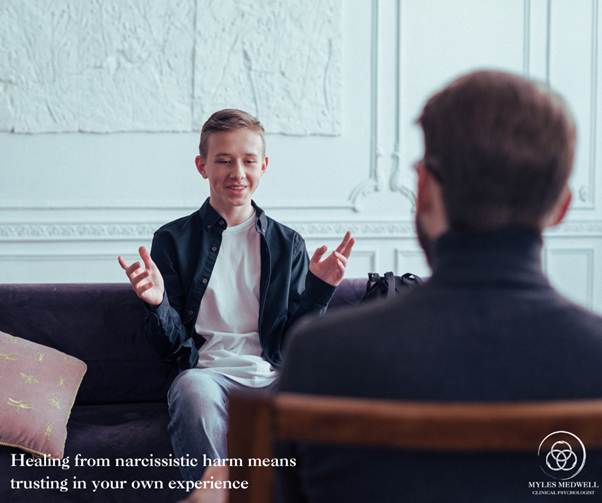
If you are recovering from a relationship that involved narcissistic harm, healing often means rebuilding trust in your own experience. It can mean grieving what you hoped the relationship would be. It can mean learning to recognise manipulation and emotional control, and practising clearer limits. It can mean reconnecting with your own needs after a long time of minimising yourself to keep the peace.
You do not have to prove someone is “a narcissist” in order to justify seeking help or choosing distance. If the relationship harmed you, that is enough.
Moving Beyond the “Black Mirror”
We live in a time where screens can function like a distorted mirror. They reflect an image back to us, but not the kind of human recognition that supports growth. Healing often begins when you step away from constant comparison and performance and enter a space where you can be met with steady attention, curiosity, and respect.

If you are ready for deeper work, whether you are struggling with narcissistic traits, narcissistic wounds, relationship patterns, trauma, or a fragile sense of self, psychoanalytic treatment can offer a careful and meaningful path.
Book a Session in Richmond
My practice is located at 53 Erin Street, Richmond, 3121, Melbourne. To book a session or learn more fill up my contact form.
If you want to learn more about self worth or self esteem, check out this article from Better Health Victoria.