Reflections from the Brisbane Psychoanalytic Congress
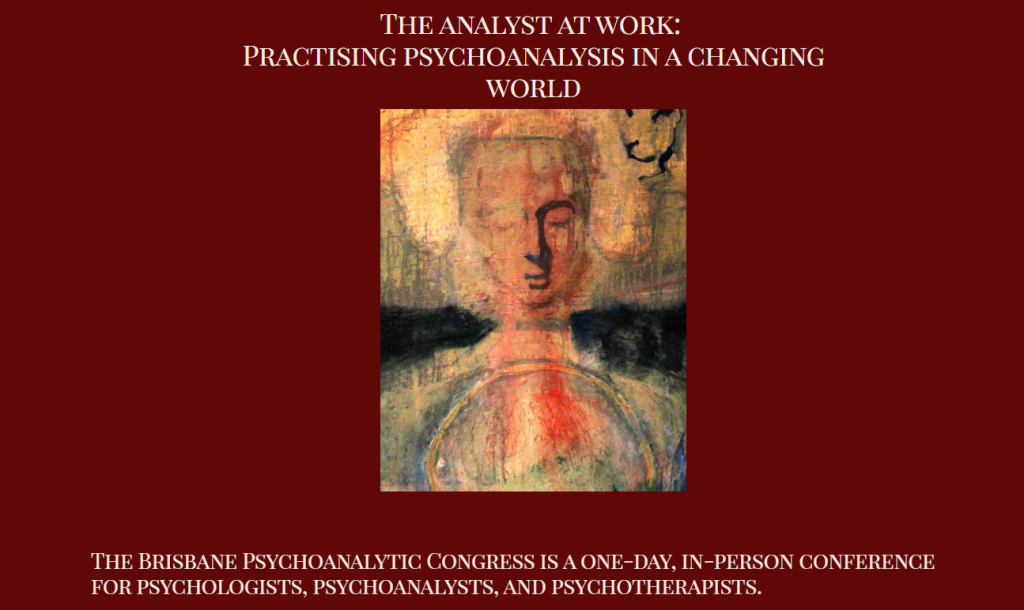
My presentation titled “Eroticising Diagnosis: From Identification to Gnosis at the Threshold of the Real,” was born out of a significant shift in my own thinking. Originally, I had intended to speak on the ethics of interpretation – a dry, perhaps safer topic. But as I prepared, I found myself circling a different set of questions, oriented by Lacan’s enduring idea of mystery.
I realized that to speak honestly about diagnosis, we cannot treat it merely as a clinical categorization. We must situate it where it actually lives: in the realm of erotics, where desire and transference are always at play.
Below, I want to share the core ideas of that speech with you. A condensed journey through the seduction of certainty, the “gnostic” nature of the unconscious, and my own personal history with the act of naming.
The Seduction of Certainty
We live in a culture that is acclaimed almost hysterically by the need for diagnosis. We see it everywhere: a cultural demand for a single explanation, a master-signifier that can name and master distress once and for all.
In my speech, I argued that when diagnosis is stripped of its erotic dimension—when it is no longer viewed as a relational dynamic between the one who knows and the one who seeks to be known—it becomes a “fetish”. It becomes a stand-in for the void, a small object that promises to fill the subject’s lack.
We see this contagion of identification today, where diagnosis spreads not unlike the “mental infection” Freud described in girls’ boarding schools. It is celebrated as if a label like ADHD or ASD could resolve suffering entirely. But this certainty is often a trap. It operates like a “purloined letter” that is empty in content but powerful in how it positions us.
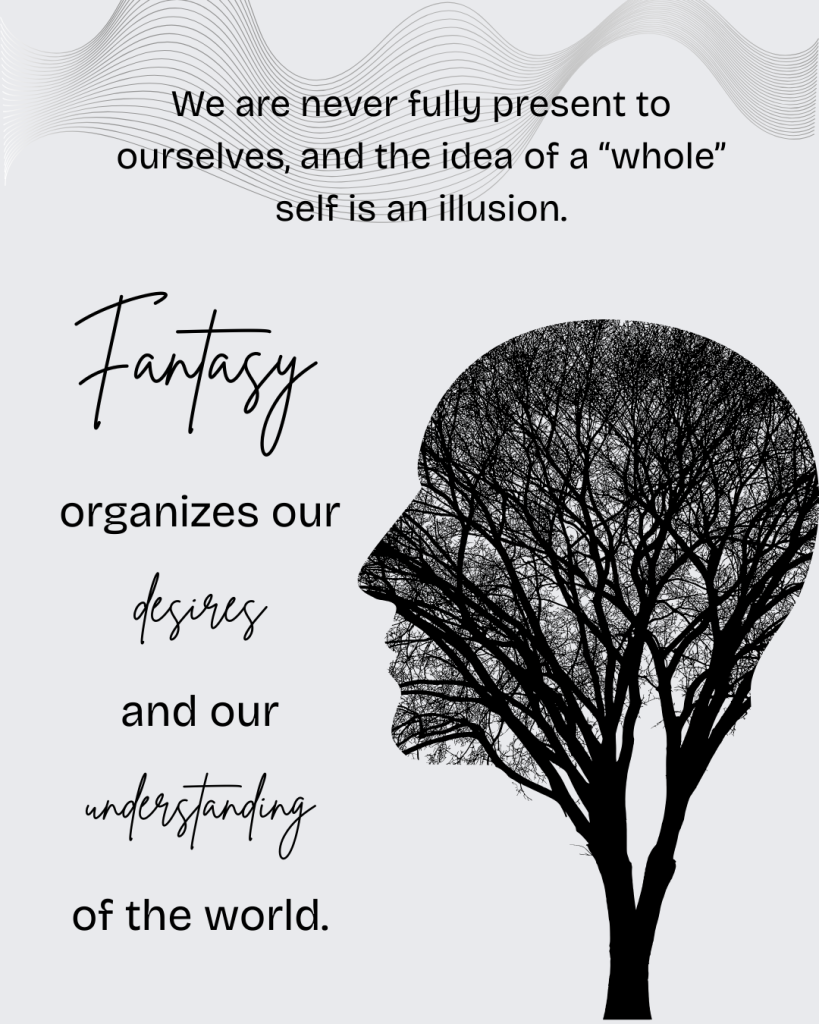
The allure is understandable. To cling to a diagnosis is to suspend one’s relation to the Real in favour of an imagined bond with an idealized Other. It asks: Where is the One who can tell me who I am? Where is the father who offers wisdom?. We beg for a clear optics of where we lack so that we might finally become “whole”. But psychoanalysis reveals that this wholeness is a fantasy.
The Gnostic Dimension
If diagnosis is not a fixed label, what is it? In my presentation, I invoked the “Gnostic” dimension to emphasize that true knowledge or the knowledge of the unconscious, exceeds the limits of fixed words or stable meanings.
Gnosis, as the ancient Gnostics practiced it, resists the demand for final definitions found in modern bibles like the DSM. Instead, it opens onto a liber novus, a new book.
I proposed that we must view diagnosis as gesturing toward what cannot be fully known or named. It opens a space of irresolvable mystery at the threshold of the Real. When we “eroticise” diagnosis, we are not sexualizing it in the crude sense; we are acknowledging that it functions as a signifier of desire.
This is the difference between a medical diagnosis and a psychoanalytic one.
- Medicine deals with colds: observable signs, verifiable causes, confirmed by a third party.
- Psychoanalysis operates where signs are forged in speech, the referent is absent, and there is no objective witness.
A Personal Truth Procedure: The Boy Who Fell
To illustrate this, I had to turn the lens inward. I believe that our theoretical positions often reflect our own analyses and personal histories. For me, the “Event”—capital E—that shaped my understanding of diagnosis was Epilepsy.
Between the ages of 11 and 13, I experienced my first seizure. I was digging a hole on the beach at Hamilton Island when, abruptly, I was transported by ambulance, boat, and seaplane.
What I remember most vividly is not fear, but a peculiar jouissance. There was something cinematic and enthralling about it. Even later, when I would fall onto my Lego plane or wake up unable to feel my legs, there was something “cool” about the loss of control, a fantasy of being carried to heaven and placed back on earth.
However, the “seizure” was not just biological. I was also “seized” by the anxiety of the Other—specifically my mother, who watched me intensely. Suddenly, my life was governed by helmets, knee pads, and precautions.
How did I cope? I identified. I said, “I am an epileptic. This is who I am”.
I found stability in an image from pop culture: Smallville. I watched Clark Kent, a figure whose body also did strange things that set him apart. In that fictional figure, I recognized both the disruption and the attempt to live with it. As Lacan teaches us, the ego finds its agency in a fictional direction. That image stabilized me, offering a surface appearance of wholeness even while the lack persisted underneath. Over time, and through my own analysis, the name “epileptic” shifted. It ceased to be an ontological verdict (“this is my essence”) and became a local signifier (“this is just one position among others”). The grip of the name loosened, and precaution no longer drowned out my desire.
The “Because” Trap and The Ship of Theseus
This personal journey deeply informs my clinical work. During my registrar period, I felt the immense pressure to be the “Master,” the subject supposed to know, determining whether a patient was ADHD or ASD.
I noticed that saying “I have ADHD” is a way of affirming being through a cause: I am this way because of ADHD. But this “because” is paradoxical. It grounds existence only by cutting the subject off from their prehistory. It asserts unity through negation.
In the speech, I discussed a patient of mine who came to me after a previous therapy ended abruptly following a diagnosis. He was preoccupied with a traumatic cause—identifying as having PTSD or CPTSD after a violent incident at work. He felt like he was “dangling by a chandelier” above a fire, terrified of opening Pandora’s box.
If I had focused solely on “curing” his PTSD, I would have fallen into the trap of furor sanandi (the rage to cure). Instead, we loosened the grip of “because I have…”.
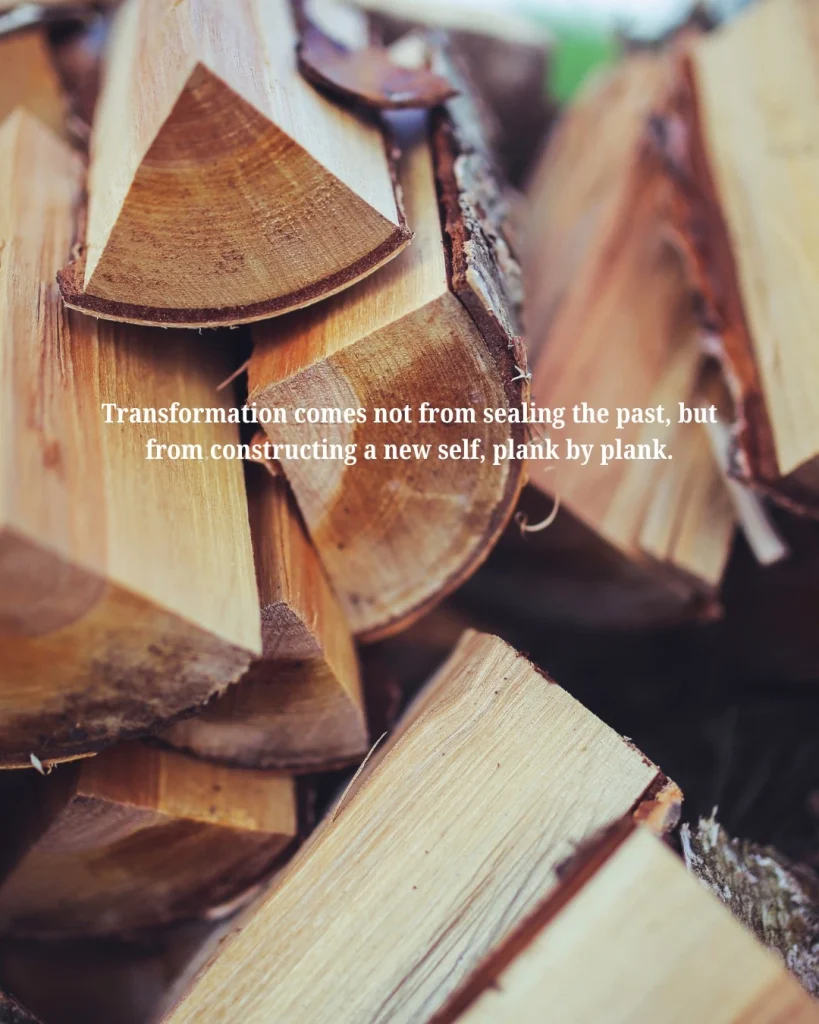
We moved from the myth of Pandora to the myth of the Ship of Theseus. Plank by plank, cut by cut, his analysis transformed him. He is no longer trying to seal the box; he is constructing a new vessel, a new myth to navigate the aggression of the Other.
Conclusion: The Hour of Estrangement
The DSM and modern psychiatry seek to stabilize experience into fixed categories. They offer the semblance of explanation without true causality.
Psychoanalysis does the opposite. It begins precisely where explanation fails.
We do not seek to unveil a hidden truth or a secret latent content behind the symptom. What matters is not what the name contains, but knowing how to do with the symptom.
To eroticise diagnosis is to return it to the field of desire. It is to hear the diagnosis not as a final verdict on your being, but as one signifier among many around which your subjective life turns.
The “gnostic act” of psychoanalysis is not to solve the mystery of who you are. It is to allow you to traverse your identifications and engage with the mystery they conceal. It is to keep the cut open, rather than suturing it shut with a label, so that something genuinely new may be said.
It was an honor to share these thoughts in Brisbane, and I look forward to exploring the “opening of the cut” with those of you who enter the consulting room.
About Myles Medwell
Myles Medwell is a Clinical Psychologist and Psychoanalytic Psychotherapist based in Richmond, Melbourne. He works with individuals navigating complex trauma, personality difficulties, and those seeking a deeper understanding of their internal world. His approach is grounded in the French psychoanalytic tradition of Jacques Lacan.
Are you finding that a diagnosis has become a wall rather than a door? If you are interested in exploring the “prehistory” of your own identifications, please reach out to schedule a consultation.